|
Alina spent nearly an hour scrolling through listings the night she decided to upgrade her floor mats, and every product photo looked more or less the same to her. Beige, black, ribbed, smooth, all claiming to be a perfect fit for her crossover. She picked the one with the best reviews and the fastest shipping, only to find out two weeks later that the mat covered barely half her footwell and left the retention clips dangling with nothing to hook onto. She hadn't known what questions to ask before buying, and it cost her both money and a returned package.
Alina's experience is common among first-time buyers, mostly because the custom mat market looks a lot more uniform from the outside than it actually is. A few key details separate a mat that's genuinely built for a vehicle from one that just claims to be.
Confirm the Fit Is Based on Your Exact Model and Year
Not all "custom" mats are created from the same level of precision. Some brands build a single template for an entire model line and apply it across several years, even when floor pan dimensions shifted with a mid-cycle redesign. Before buying, it's worth confirming that the fit data was generated for the specific year, trim, and body style being purchased, since even small design changes between model years can affect how well a mat sits against the floor.
Understand What the Mat Is Actually Made Of
Material matters just as much as fit. Rubber and TPE mats are common at the budget end of the market, and while they handle moisture reasonably well, they tend to feel stiff, wear down faster, and rarely match the interior aesthetic of a nicer vehicle. Eco-leather construction, by contrast, offers a more refined look and feel while still managing moisture and wear, provided it's built with enough layers to hold up over time rather than a single thin sheet stretched over a mold.
Check How the Mat Attaches to the Vehicle
Retention clips are one of the most overlooked details in the entire buying process, yet they're directly tied to safety. A mat that isn't anchored to the vehicle's factory attachment points can shift forward under braking, and that shifting is exactly the kind of hazard that has led to real-world recalls in the automotive industry. Before buying, it's worth checking whether the mat includes clips designed to match the vehicle's actual anchor points, rather than generic hooks that may or may not line up.
Know What Level of Detail Went Into the Design Process
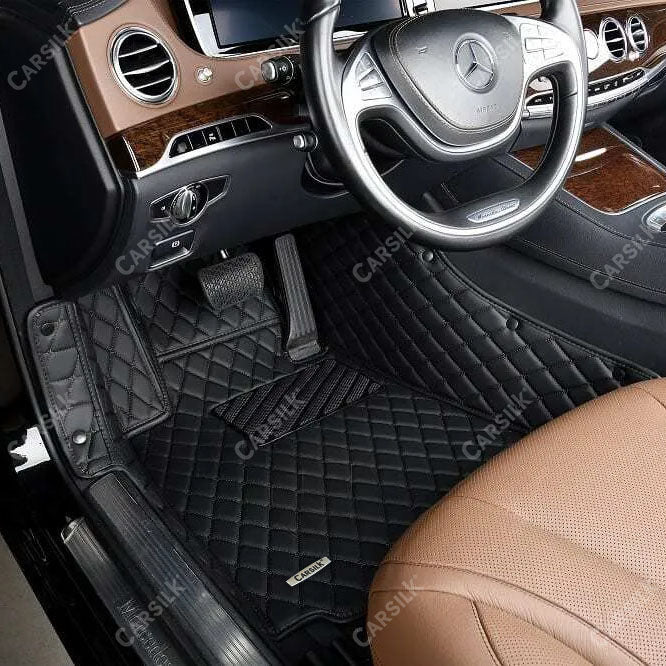
The best fit comes from mats designed using precise measurements of the actual vehicle rather than estimates based on similar models. CarSilk builds each mat using 3D laser scanning technology mapped across more than 800 vehicle models, then hand-assembles the final product from five layers of eco-leather rather than rubber or TPE. That level of detail is what separates genuinely custom car mats from something that only resembles a custom fit in the product photos. Every footwell contour and anchor point is accounted for before a single mat is cut.

Anyone shopping for their exact vehicle can browse fit-specific options here: https://carsilks.com/collections/car-floor-mats-collection/ — organized by make, model, and year.
A Few Minutes of Research Prevents a Poor Fit
Buying custom car mats without checking these details is how buyers end up in the same position Alina did, holding a product that looked right in photos but didn't actually match their vehicle. Confirming the fit data, understanding the material, checking the attachment points, and knowing how precisely the mat was designed are simple steps that make the difference between a mat that lasts for years and one that gets returned within weeks.
Curious how custom mats stack up against the cheaper universal alternative? Read next: How Do Custom Car Mats Compare to Universal Floor Mats?
|


