Guest
Guest
Jan 29, 2026
5:06 AM

|
Most baseball uniforms have the names and uniform numbers of players who wear them, usually on the backs of the uniforms to distinguish players from each other. Baseball shirts (jerseys), pants, shoes, socks, caps, and gloves are parts of baseball uniforms. Most uniforms have different logos and colors to aid players, officials, and spectators in distinguishing the two teams from each other and the officials Baseball Uniforms.
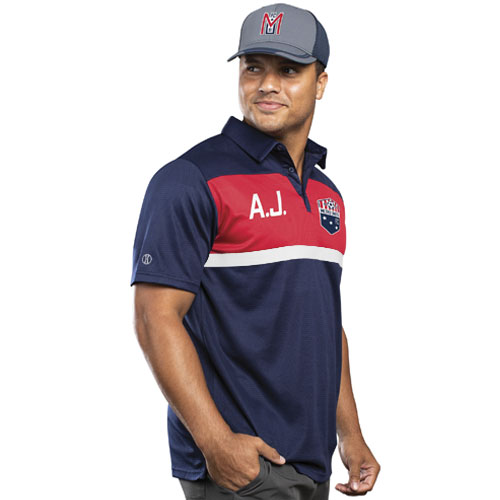
Baseball uniforms were first worn by the New York Knickerbockers Baseball Club in 1849. Today, sales of replica uniforms and derivative branded products generate large amounts of income for Major League teams through merchandising.
The New York Knickerbockers were the first baseball team to wear uniforms, taking the field on April 4, 1849, in pants made of blue wool, white flannel shirts and straw hats.
The practice of wearing a uniform soon spread, and by 1900, all Major League Baseball teams had adopted them.
By 1882 most uniforms included stockings, which covered the leg from foot to knee, and were used to differentiate one club from another. The uniforms themselves had different colors and patterns that reflected the different baseball positions.
In the late 1880s, the Detroit Wolverines and Washington Nationals of the National League and the Brooklyn Bridegrooms of the American Association were the first to wear striped uniforms.
Home and road uniforms
By the end of the 19th century, teams began the practice of wearing one of two different uniforms, one when they played in their own baseball stadium and a different one when they played on the road. It became common to wear white at home and one of gray, solid dark blue, or black on the road. An early example of this is the Brooklyn Superbas, who started to use a blue pattern for their road uniforms in 1907.
In 1916, on the New York Giants' road uniforms, purple lines gave their uniforms a tartan-like effect, and another kind of road uniform was a solid dark blue or black material with white around this time. The Kansas City Athletics' home and road uniforms were changed by Charles O. Finley in 1963, to the colors of gold and green. Some teams used light blue for their road uniforms from the 1970s to the early 1990s. Early striped patterns developed into long stripes along the length of the uniforms, called pinstriping. This was first worn on some major league baseball team's uniforms in 1907, and the pinstripes were then widened in 1912, so that the crowd could see them more clearly. The Chicago Cubs were wearing pinstripes in 1907 The Brooklyn Bridegrooms used checked uniforms in 1889, and brought them back in 1907 (as the Superbas) and 1916–1917 (as the Robins). Satin uniforms were developed by several teams including the Brooklyn Dodgers for night games, as the sheen of the fabric was more reflective and thus easier to see. Pinstripes were commonly worn on the uniforms of the New York Yankees. Legend had it that the stripes were adopted to make Babe Ruth look slimmer, but since the Yankees had already been wearing pinstripes a few years before Ruth played for them in 1920, the legend is most likely a myth. The Yankees' pinstripes on their home uniforms soon became a team symbol.
In 1916, the Cleveland Indians became the first team to add numbers on their uniforms, positioned on the left sleeve of the home uniforms only. (Okkonen, p. 36, p. 120) In 1929, numbers were first added on the backs of uniforms by the New York Yankees and the Cleveland Indians. By 1932, all major league baseball teams had numbers on their players' uniforms. The Brooklyn Dodgers, in 1952, became the first baseball team to add numbers to the fronts of their uniforms. In 1960, the Chicago White Sox were the first team to place players' names on the back of their jerseys, doing so on their road jerseys; within a few years, this practice became almost universal in MLB, though to this day the Yankees have only worn names on their uniforms for Players Weekend, a discontinued event (2017-2019) where alternate uniforms with nicknames were used.
In most parts of the world, numbers are no more than two digits long; however, Japanese players who are on their team's developmental roster have three-digit numbers. Major league teams typically assign the highest numbers (#50 and above) in spring training to the players who are not expected to make the regular-season roster; hence the lower numbers are considered more prestigious, although there are many veterans who wear high numbers anyway. Two Hall of Famers who wore high numbers are Don Drysdale, who wore #53 for the Brooklyn and Los Angeles Dodgers, and Carlton Fisk, who wore #72 for the Chicago White Sox (reverse of the #27 he wore with the Boston Red Sox; Fisk also was the American League Rookie of the Year in 1972).
Controversy over major league baseball teams' newly redesigned uniforms erupted during spring training in 2024. Major League Baseball debuted a slate of new uniforms that were designed by Nike and manufactured by Fanatics. Many players were upset with the way the jerseys looked, saying that the smaller numbers and letters made them feel as if they were wearing replicas. One player complained that the team name on jerseys for the Philadelphia Phillies was off-center. Concerns about the new uniform pants included the observation that tucked in jerseys were visible through home white pants. In response, Nike issued a statement saying that "We will continue to work with MLB, the players, and our manufacturing partner to address player uniforms."
Caps, or other types of headgear with eye-shades, have been a part of baseball uniforms from the beginning.
From the 1840s to the 1870s, baseball players wore various types of hats, or even no cap at all, since there was no official rule regarding headgear. Examples included full-brimmed straw hats such as boating caps, jockey caps, cycling caps, and flat-topped caps.
|